
Why fluid leaks deserve prompt attention
A small patch underneath a parked vehicle can be harmless air-conditioning condensation, but disappearing engine oil or coolant is different. These fluids protect heavily loaded components, control operating temperature and help prevent internal damage. At GP Motor Works, a suspected leak is investigated as a diagnostic problem: the team identifies the fluid, locates the source and checks whether connected components have already been affected.
How to distinguish coolant, engine oil and normal condensation
- Air-conditioning condensation: usually clear water beneath the vehicle after the air conditioner has been operating, with no oily residue or falling coolant level.
- Engine coolant: may be coloured, leave a dry residue around a leaking joint and be accompanied by repeated top-ups, overheating, warning messages or a sweet smell.
- Engine oil: usually feels slippery, may range from amber to dark brown and can leave residue around the engine, undertray or parking surface.
- Other fluids: transmission, power-steering and brake-fluid leaks require their own inspection and should never be diagnosed by colour alone.
Tracing coolant leaks on BMW, MINI and other vehicles
The first step is to confirm the symptoms, inspect the coolant level when the engine is cold and look for visible staining around hoses, connectors and the expansion tank. A cooling-system pressure test is then carried out using a pressure appropriate to the vehicle manufacturer’s specification; applying excessive pressure can damage a healthy system.
Common areas requiring inspection include the radiator, expansion tank, pressure cap, thermostat housing, electric or mechanical water pump, coolant pipes, seals and hose connections. Depending on the vehicle, technicians may also inspect turbocharger cooling lines, charge-air cooling circuits, transmission or engine-oil coolers, heater circuits and diesel exhaust-gas-recirculation coolers.
Some leaks only appear when the engine reaches operating temperature or when a connection expands under pressure. Others are hidden behind undertrays or inside the cabin near the heater circuit. Where necessary, the workshop considers additional testing for combustion gases, internal coolant loss or contamination, based on the vehicle’s symptoms rather than assumptions.
Finding the source of an engine-oil leak
Oil can travel across an engine before dripping, so the lowest wet point is not always the failed component. An inspection may begin with cleaning the affected area, checking the oil level and tracing fresh residue back to its source. On BMW, MINI and other engines, possible locations include the valve-cover gasket, oil-filter housing, sump gasket, turbocharger oil lines, oil cooler, crankshaft seals and timing-cover joints.
An oil leak close to the drive belt, alternator or hot exhaust should be treated promptly because secondary damage can be more costly than the original seal. If the engine shows an oil-pressure warning, significant smoke, a strong burning smell or a rapidly falling oil level, the vehicle should be stopped safely and assessed before further driving.
Why the correct coolant matters
Engine coolant is more than coloured water. The approved coolant formulation helps manage freezing and boiling protection, corrosion resistance and compatibility with seals, metals and cooling-system components. Mixing unsuitable products or topping up repeatedly with plain water can weaken this protection. Coolant type, mixture ratio and replacement intervals should follow the manufacturer’s requirements for the specific vehicle.
Repair, bleeding and final confirmation
Once the source has been confirmed, the affected hose, gasket, seal, pump, radiator or housing can be repaired or replaced as appropriate. The system is refilled with the correct fluid, bled using the manufacturer’s specified process and checked again for pressure stability, correct operating temperature and signs of continuing leakage. For an oil leak, the repair is followed by level verification and an inspection after the engine has run.
Never remove a coolant cap while the engine is hot. If a temperature warning appears, visible steam develops or coolant is lost rapidly, arrange a safe inspection rather than continuing to drive.
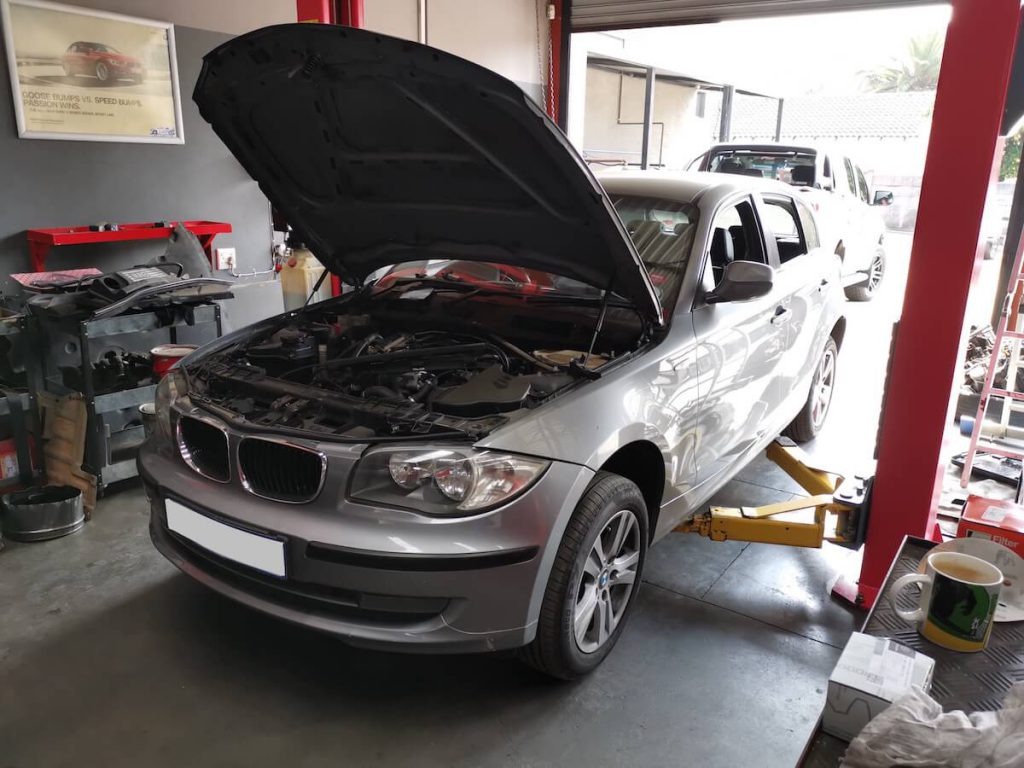
Examples from our workshop


Contact GP Motor Works to discuss your vehicle or arrange an inspection.